
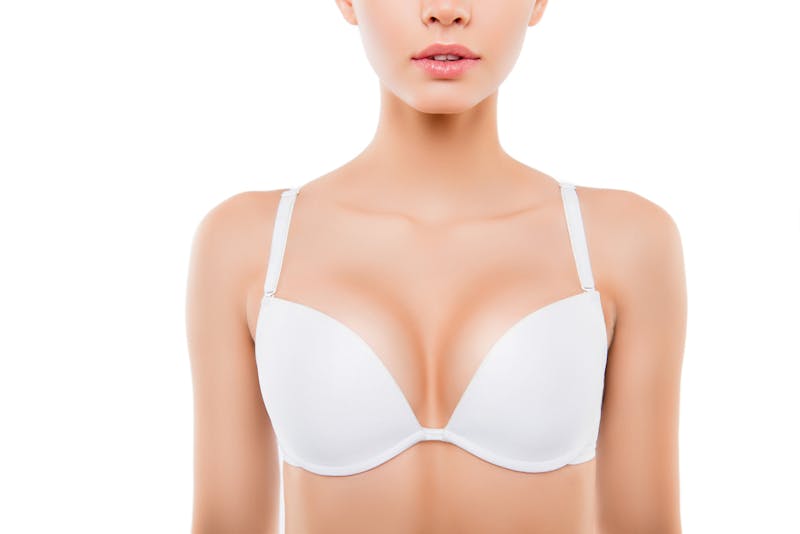
Breast sagging, medically known as ptosis, is rarely caused by a single event. It's usually the result of several changes happening beneath the skin at once: weakening internal support structures, shifting skin elasticity, and the steady pull of gravity over time. Dr. Michael Eisemann, a triple-board-certified plastic surgeon with more than three decades of experience, and Dr. Bradley Eisemann, a board-certified plastic surgeon fellowship-trained in craniofacial surgery, see this concern frequently among their Houston patients. In this blog, they break down what's actually happening inside the breast when sagging develops, what you can realistically do to manage it, and when a breast lift becomes the most effective solution.
What Causes Breast Sagging?
Several overlapping factors contribute to breast sagging, and most patients experience more than one at the same time. According to a review published in the Annals of Plastic Surgery, the strongest predictors of ptosis are body mass index, breast size, a history of significant weight loss, smoking, the number of pregnancies a patient has had, and age.
Common causes include:
- Loss of skin elasticity as collagen and elastin naturally decline with age
- Stretching of the breast's internal suspensory ligaments, which lose their ability to hold breast tissue in place
- Pregnancy and breastfeeding, which temporarily increase breast volume and place lasting strain on internal support tissue
- Significant weight fluctuation, which stretches skin and connective tissue with each gain or loss
- Gravity and the natural aging process, which gradually pull breast tissue downward over decades
- Genetics, which influence skin elasticity, breast density, and how much support your tissue provides on its own
The Role of Cooper's Ligaments in Breast Support
The breast's internal suspensory ligaments, known as Cooper's ligaments, are the main reason breasts hold their shape and position on the chest wall. These fibrous bands run from the deep chest tissue through the breast to the skin, forming an internal framework that anchors and separates the breast's tissue compartments, keeping them in place, according to anatomical reference materials from IMAIOS e-Anatomy.
Unlike muscle, these ligaments don't respond to exercise or strengthening. Once they stretch, from pregnancy, weight change, or simply years of gravity, they don't return to their original length on their own. A higher body mass index, larger breast size, and significant weight fluctuation all speed up this stretching process, which is why ptosis tends to progress faster in patients who experience major weight changes.
This is the piece many patients don't realize: sagging isn't primarily a skin problem. It's a structural one, which is exactly why surface-level treatments so often fall short of correcting it.
Can You Prevent Breast Sagging?
Certain habits can slow the rate of sagging, but none can prevent it entirely once genetics, pregnancy, or age come into play. Maintaining a stable weight, wearing supportive garments during high-impact activity, and protecting skin elasticity with sun protection and hydration all help preserve breast support longer.
None of these measures reverses ligament stretching or restores lost skin elasticity. Patients who already notice sagging are seeing the results of structural changes that lifestyle habits alone cannot undo, which is an important distinction to understand before investing time in prevention-focused routines.
Do Non-Surgical Treatments Reverse Sagging?
Non-surgical skin-tightening treatments can modestly firm the skin's surface, but they cannot lift breast tissue or repair stretched ligaments. These treatments work on the skin's outer layers, while the structural support that maintains breast position lies much deeper.
For patients with mild skin laxity and minimal ptosis, non-surgical options may offer subtle improvement. For patients with moderate-to-severe sagging, surgical repositioning is the only method that directly addresses the underlying structural change.
When a Breast Lift Is the Right Solution
A breast lift, or mastopexy, corrects sagging by removing excess skin and repositioning breast tissue higher on the chest wall. It's the only treatment that directly addresses both the skin laxity and the underlying support issues driving ptosis. Breast lifts remain one of the most commonly performed breast procedures in the country: the American Society of Plastic Surgeons recorded 153,616 breast lifts in 2024, with the largest share performed on patients between ages 40 and 54.
The right surgical approach depends on how much sagging is present, along with your skin quality and breast size. During a consultation at Eisemann Plastic Surgery Center, Dr. Eisemann evaluates your degree of ptosis and anatomy to recommend the incision pattern and technique suited to your goals. For a full breakdown of incision options and what to expect during recovery, visit our breast lift page.
Why Choose Eisemann Plastic Surgery Center for a Breast Lift
Dr. Michael Eisemann is triple board-certified by the American Board of Plastic Surgery, the American Board of Facial Plastic and Reconstructive Surgery, and the American Board of Otolaryngology–Head and Neck Surgery, and serves as faculty at both Baylor College of Medicine and Weill Cornell Medicine. His son, Dr. Bradley Eisemann, is a board-certified plastic surgeon with fellowship training in craniofacial surgery, bringing an additional layer of precision to complex breast cases.
Every breast lift at Eisemann Plastic Surgery Center is performed in the practice's private, AAAASF-accredited surgical suite using IV sedation with nerve blocks rather than general anesthesia. This approach, detailed in Dr. Eisemann's own published research, allows many patients to avoid the grogginess and longer recovery window associated with general anesthesia.
Ready to Address Breast Sagging? Dr. Eisemann Can Help
Breast sagging develops from a combination of ligament stretching, skin changes, and time, not from any single lifestyle factor you could have controlled. Understanding this is the first step toward choosing a solution that actually works. If you're ready to explore whether a breast lift is right for you, schedule a consultation with Dr. Michael or Dr. Bradley Eisemann at their Houston practice to discuss your anatomy, goals, and options in detail.
This information is provided for educational purposes only and does not replace a consultation with a board-certified plastic surgeon. Outcomes, risks, and suitability vary from patient to patient.
Sources
- Rinker, B., Veneracion, M., Walsh, C.P. "Breast Ptosis: Causes and Cure." Annals of Plastic Surgery, 64(5), 579–584, 2010. https://journals.lww.com/annalsplasticsurgery/abstract/2010/05000/breast_ptosis__causes_and_cure.16.aspx
- American Society of Plastic Surgeons. "2024 Plastic Surgery Statistics Report." https://www.plasticsurgery.org/documents/news/statistics/2024/plastic-surgery-statistics-report-2024.pdf
- IMAIOS e-Anatomy. "Suspensory Ligaments of Breast." https://www.imaios.com/en/e-anatomy/anatomical-structures/suspensory-ligaments-of-breast-121003464
- Colque, A., Eisemann, M. "Breast Augmentation and Augmentation–Mastopexy with Local Anesthesia and Intravenous Sedation." Aesthetic Surgery Journal, 32(3), 303–307, 2012.